Any incident or event has multiple parties and participants involved. Have you noticed a third-party storyteller taking two movies out of the same situation, covering one party and focusing on both sides? That too on an incident like War? And both films are neutral without having any prejudice?
Recently I got a chance to watch two movies, “Letters From Iwo Jima” and “Flag of Our Fathers”, back to back on a long-haul flight. Of all the options, why did I choose these two movies? There is an interesting backstory to it. I watched “Flag of Our fathers” in the late 2000s in Hyderabad. As a fan of drama genres, I liked it very much. I was looking forward to watching it again.Cut back to 2022; I was delighted to see this movie’s name in the catalogue. I also saw the title “Letters from Iwo Jima”. I thought it would be nice to see both films to get the complete picture.
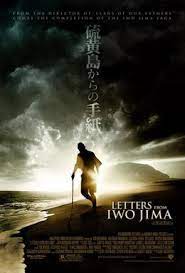
Both the movies are nicely set drama movies set in the backdrop of war. However, the degree to which it touches the personal side of soldiers differs. In the “Letters from Iwo Jima”, we could visibly see the pain of civilians forced into army platoons. Their dilemma, priorities and how they execute the commands are captured in a heart-touching way. We could see that the Japanese had much to fight for (including Diarrhea) apart from the Americans. The grace in the commander’s face brings a lot of credibility to the narrative.
On the contrary, “Flag of our fathers” shows the guilt of a soldier carrying the pride that deserves another person. How fame is short-lived, and the contacts might not be helping when in need.
Few observations on the war
- Both Japanese and American leadership did not support their soldiers. While the Japanese did not provide air force help, American leadership gave only a few days to start with
- The Japanese started the battle with low morale. This amplified their self-doubt and fighting attitude.
- The Japanese majors did not trust their superiors and did not execute the orders.
- Both the army leadership did not care for their soldiers. There is a scene where a soldier jumps from a ship by mistake and is not rescued and is ignored.
- The brutal American politician exploiting the sentiment and raising money for war shows the administration’s priorities.
- War is won based on mental strength, not just weapons.
- The life of an ordinary soldier is the same, whether you are on the winning side or the losing side.
While most movies on soldiers and war have an emotional angle, the interactions between the soldiers are usually high on adrenaline. In both these, I see the emotions to be very subtle along with insecurities a regular human faces.
Last but not least, both of these movies are directed by Clint Eastwood. Do watch them. Further, each of these movies adoption of novels with the same name as the movie titles. Do read them as well.
 Life & Thoughts of Hariharan Anantharaman